


Creative logo design inspiration for your small business
- Pawan Samarakoon
- 6 days ago
- 7 min read
TL;DR:
A well-designed logo instantly builds credibility and trust within 400 milliseconds.
Simplicity, color psychology, and consistency are key to a memorable and effective logo.
Investing in professional design ensures a versatile, scalable logo that enhances long-term branding.
Your logo is often the first thing a potential customer notices about your business, and that first impression forms in just 400 milliseconds. For entrepreneurs and small business owners, that’s almost no time at all to communicate trust, personality, and value. A well-crafted logo can make your brand feel established and credible before you say a single word. Studies show that 75% of consumers judge a brand’s credibility based on its visual design alone. This guide walks you through what makes logos work, curated design ideas, style comparisons, and practical budget advice so you can move forward with confidence.
Table of Contents
Key Takeaways
Point | Details |
Memorable first impressions | A logo has just 400 milliseconds to form a strong impression with potential customers. |
Simplicity boosts recall | Simple logos are 13% more likely to be remembered and create lasting recognition. |
Color drives consumer trust | Color choices, like blue for trust, greatly impact credibility and brand recognition. |
Consistency maximizes ROI | Using your logo consistently across all channels saves up to 23% on branding costs. |
What makes a logo memorable and effective?
Now that you understand the power of a great first impression, let’s identify what separates memorable logos from forgettable ones. A logo isn’t just a pretty graphic. It’s a shortcut your audience uses to decide whether they trust you. Understanding the psychology behind effective logos helps you make smarter creative decisions from the start.
Here are the core characteristics that define a high-performing logo:
Simplicity: Simple logos are 13% more memorable than complex ones, making them easier to recognize across every platform.
Color psychology: Blue evokes trust in 34% of consumers, while red signals energy and urgency. Choosing the right palette is a strategic move.
Scalability: A great logo looks sharp on a business card and a billboard. If it breaks down at small sizes, it’s not working hard enough.
Relevance: Your logo should reflect your industry and audience. A law firm and a food truck have very different visual needs.
Consistency: Using your logo the same way across every touchpoint builds recognition over time.
“A logo doesn’t sell the company directly, but it identifies a company in a way that’s recognizable and memorable.” — Paul Rand
Understanding logo design basics before jumping into creation saves you costly revisions later. Color alone can increase brand recognition by up to 80%, which means every design choice carries real business weight. The role of logos in branding goes far beyond aesthetics. It’s about creating a visual anchor that customers return to again and again.
Pro Tip: Test your logo in black and white first. If it still communicates clearly without color, it’s built on a strong foundation.
7 logo design ideas for immediate inspiration
With a clear set of criteria in mind, here’s a curated set of logo design ideas to kickstart your inspiration process. Different logo types serve different branding goals, so matching the right style to your business model is essential.
Minimal wordmark: Your business name styled in a clean, custom font. Think Google or FedEx. Works best for businesses where name recognition is the primary goal.
Symbolic icon: A standalone graphic that represents your brand values. Apple’s apple or Twitter’s bird are classic examples. Great for businesses planning to scale globally.
Negative space logo: A design that uses the space around or within shapes to hide a secondary image. This approach rewards attention and creates a clever, memorable impression.
Vintage badge: Circular or shield-shaped designs with layered typography. Perfect for craft breweries, barbershops, or any brand leaning into heritage and authenticity.
Abstract mark: A geometric or fluid shape that doesn’t represent a literal object but communicates a feeling. Pepsi and Nike use this approach to signal energy and movement.
Mascot logo: A character or illustrated figure that gives your brand a face. Ideal for family-friendly businesses, food brands, or sports teams wanting a relatable identity.
Dynamic logo: A logo system that adapts its color, shape, or layout depending on context. Used by brands like Google Doodle, this approach keeps things fresh while maintaining core recognition.
The best logo for your business isn’t the most creative one. It’s the one your customers remember and trust.
Maintaining branding cohesion tips across all your materials ensures your chosen logo style pays off long-term. Each of these seven styles can work beautifully when applied with consistency and purpose.
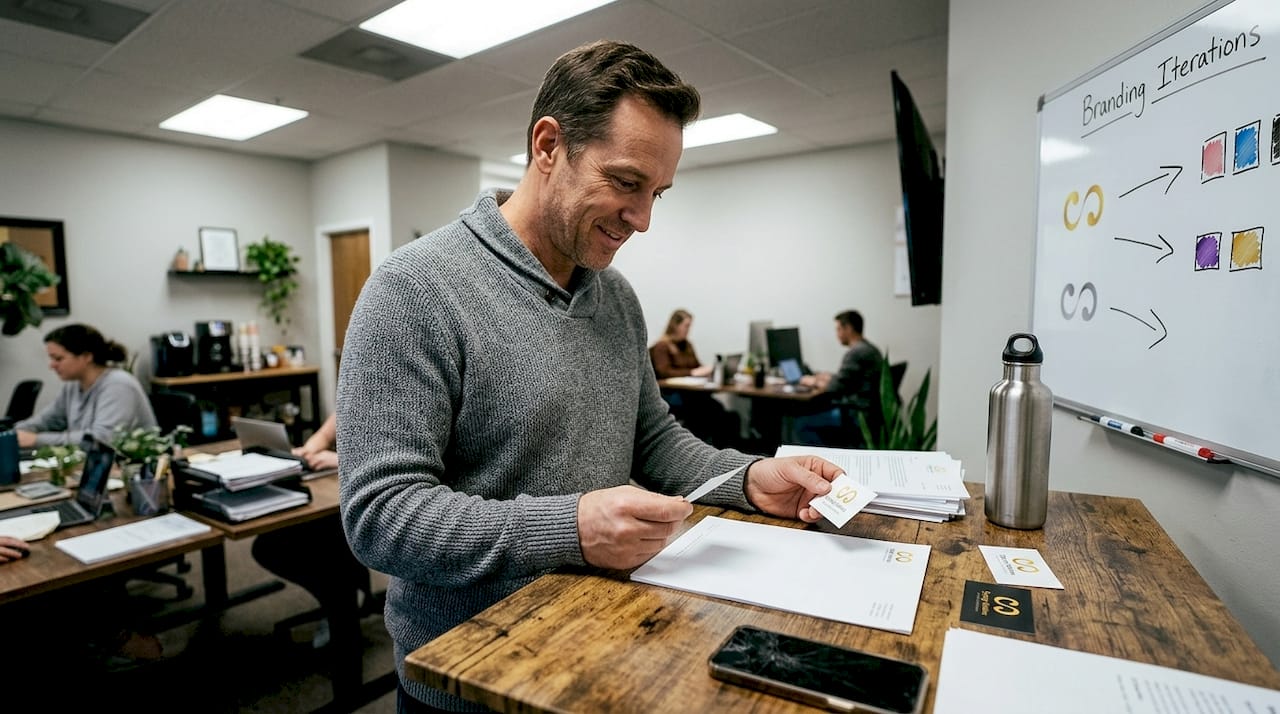
Pro Tip: Sketch five rough versions of your logo concept before opening any software. Hand-drawn drafts reveal what actually feels right before you invest time in digital tools.
Comparing top logo design styles by impact
To help narrow the field, here’s how different logo styles compare in terms of business impact.
Logo style | Emotional impact | Best-suited industries |
Wordmark | Professional, trustworthy | Law, finance, consulting |
Pictorial mark | Memorable, iconic | Tech, retail, lifestyle |
Combination mark | Versatile, balanced | Startups, agencies, services |
Abstract mark | Modern, energetic | Fitness, tech, innovation |
Mascot | Friendly, approachable | Food, education, entertainment |
Emblem | Prestigious, authoritative | Government, schools, luxury |
Dynamic logo | Adaptive, forward-thinking | Media, digital platforms |
With 75% of consumers judging credibility by design, the emotional trigger your logo fires matters as much as the visual itself. Color reinforces this: blue evokes trust in 34% of buyers, making it the dominant choice in financial and healthcare sectors.
Before committing to a style, ask yourself these questions:
Do I want my brand to feel playful or authoritative?
Will my logo appear mostly on screens or print materials?
Is my business name short and strong enough to carry a wordmark?
Do I need a logo that works without color in some contexts?
Am I building a personal brand or a company brand?
Understanding color in branding helps you make choices that resonate emotionally with your target audience. Pair that with a commitment to brand consistency and your logo becomes a genuine business asset rather than just a visual decoration.
Cost, DIY, and professional tips for small business logos
Once you’ve found your inspiration, consider the resources and routes available for actually creating your logo. Small businesses typically budget $100 to $1,000 for custom logos, and using DIY or AI tools for early concepts can save up to 23% when consistency is prioritized throughout the process.
Option | Typical cost | What you get | Best for |
DIY tools (Canva, Looka) | $0 to $50 | Templates, basic customization | Testing concepts, tight budgets |
Freelance designer | $100 to $500 | Custom design, limited revisions | Small businesses, early stage |
Branding agency | $500 to $5,000+ | Full brand identity, file packages | Growth-stage businesses |
Small businesses often make these common logo mistakes:
Using raster files (like JPG) instead of vector files (like SVG or AI), which causes blurry logos when scaled up.
Skipping brand guidelines, so the logo gets used inconsistently across platforms.
Choosing trendy fonts that date quickly and require a redesign within a few years.
Ignoring how the logo looks on dark backgrounds or in single-color applications.
Underestimating file preparation costs, which can add unexpected expenses after the design is done.
A solid branding checklist helps you avoid these pitfalls before they cost you money. Free tools are excellent for generating ideas and testing directions, but a professional designer ensures your final files are production-ready and legally protected.
Pro Tip: Always request your logo in at least three formats: a vector file for print, a transparent PNG for digital use, and a simplified favicon version for your website browser tab.
Why creativity alone isn’t enough for logo success
Stepping beyond the practical considerations, let’s look at what really drives logo return on investment. Most small business owners assume their logo struggles because it’s not creative enough. In our experience working with entrepreneurs across industries, the real problem is almost always inconsistent use, not a lack of originality.
A beautifully designed logo that appears differently on your website, your business cards, and your social media profiles sends mixed signals to potential customers. It quietly communicates disorganization, even when your actual product or service is excellent. Consistency in logo use leads to higher brand ROI and 23% cost savings over time, because you’re not constantly patching and correcting visual errors.
Overly complex logos are another trap. Intricate designs that look stunning in a design presentation often fall apart at small sizes or in single-color print applications. Simplicity isn’t a creative compromise. It’s a strategic advantage.
The brands that win long-term aren’t always the ones with the most original logos. They’re the ones that apply their logo with discipline and intention across every customer touchpoint. Pairing that discipline with strong brand consistency for trust is what transforms a logo from a graphic into a genuine business asset.
Bring your logo inspiration to life with expert help
As you pursue your ideal logo, expert support can maximize your results and consistency. Turning inspiration into a polished, professional logo requires more than great ideas. It requires technical skill, strategic thinking, and a clear process.
At LOOM Brand Designs, we specialize in helping small business owners move from concept to finished brand identity with confidence. Our basic branding package is built for entrepreneurs who need a strong foundation, while our standard branding package delivers a complete identity system ready for growth. Our team of professional graphic design experts handles everything from initial sketches to final file delivery, so your logo works beautifully everywhere it appears. Book a consultation today and take the guesswork out of your brand’s first impression.
Frequently asked questions
What is the most important factor in logo design for small businesses?
Simple, consistent logos are the most effective because they’re easier to remember and build trust faster across every platform your business uses.
How much should I budget for a small business logo?
Most small businesses spend between $100 and $1,000 on a custom logo, depending on the level of customization and the designer’s experience.
Do colors in my logo really matter?
Absolutely. Blue evokes trust in 34% of consumers, and the right color palette can boost overall brand recognition by as much as 80%.
Should I use a free logo maker or hire a designer?
Free and AI-powered tools are excellent for exploring early concepts, but a professional designer ensures your final logo is production-ready and consistent across all applications.
How can I keep my logo design consistent everywhere?
Save your logo in multiple file formats, including vector and PNG, and create a simple one-page brand guide that specifies approved colors, sizes, and usage rules across platforms.
Recommended
Comments