


Digital Marketing Strategy Guide: Small Business Growth
- Pawan Samarakoon
- Mar 31
- 8 min read

Your competitors are outranking you online. They’re capturing leads, building trust, and growing revenue while you’re still figuring out where to start. The good news? A focused digital marketing strategy can level the playing field fast. With short-form video delivering the highest ROI and AI reshaping how customers discover businesses, small companies now have powerful tools to compete. This guide walks you through building a results-driven strategy that fits your budget and timeline.
Table of Contents
Key Takeaways
Point | Details |
Leverage AI and video | AI tools and short-form videos deliver the best ROI for small businesses online. |
Focus on authority, not just keywords | SEO success in 2026 means building brand and topic authority along with quality content. |
Start simple, scale smart | Begin with core platforms, measure what’s working, and grow your digital presence strategically. |
Track and optimize continuously | Use analytics to spot what works and constantly refine your strategy for lasting growth. |
Understanding the digital marketing landscape in 2026
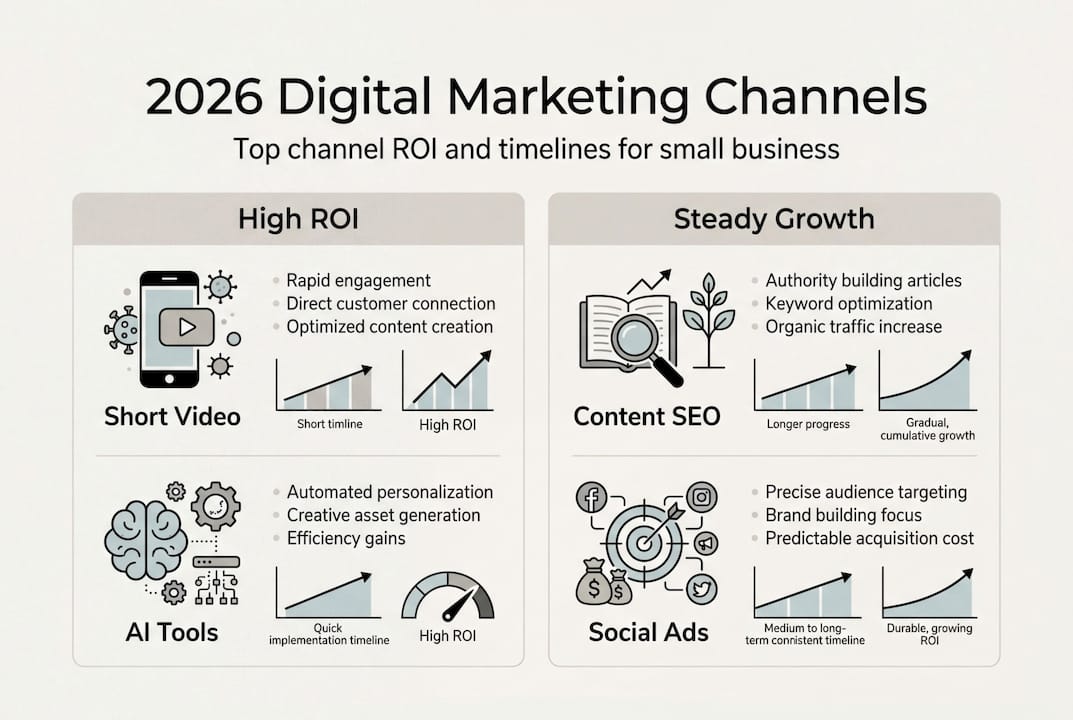
The rules have changed. Traditional keyword stuffing no longer works, and customers expect personalized experiences at every touchpoint. 48% of marketers now use AI for personalized content, creating tailored messages that resonate with specific audience segments. Meanwhile, search engines prioritize authority and entity recognition over simple keyword matches.
Three forces are reshaping digital marketing:
AI-driven personalization: Automated tools analyze customer behavior to deliver customized content, emails, and product recommendations
Authority-based SEO: Search algorithms now evaluate your brand’s credibility and expertise rather than just matching keywords
Video-first discovery: Short-form video is the highest ROI format, with platforms like TikTok and Instagram Reels driving massive engagement
Social networks function as search engines now. Customers discover businesses through Instagram searches, TikTok recommendations, and YouTube tutorials before ever visiting Google. This shift demands a multi-platform approach where your brand shows up wherever customers look.
2026 Digital Marketing Channel Performance
Channel | Average ROI | Time to Results | Best For |
Short-form video | 4.2x | 2-4 months | Brand awareness, engagement |
Email marketing | 3.8x | 1-3 months | Nurturing leads, conversions |
SEO/Content | 3.5x | 4-8 months | Long-term traffic, authority |
Social media organic | 2.9x | 2-5 months | Community building, discovery |
Paid advertising | 2.4x | Immediate | Quick wins, testing |
The landscape rewards businesses that combine these channels strategically. A video on Instagram can drive traffic to your website, where email capture builds your list, while SEO content establishes authority that converts browsers into buyers. Understanding how these pieces fit together is your first competitive advantage. Explore more about digital marketing trends 2026 to stay ahead.
Prepare for success: Tools and essentials you need
You don’t need a massive budget to start. The right toolkit depends on your goals, but every small business needs these core categories:
Content scheduling platforms: Buffer, Hootsuite, or Later for planning social posts across multiple channels
Analytics software: Google Analytics 4 and platform-specific insights to track what’s working
Email marketing tools: Mailchimp, ConvertKit, or ActiveCampaign for building and nurturing your list
Video creation apps: CapCut, InShot, or Canva for producing short-form content without expensive equipment
SEO research tools: Ubersuggest, SEMrush, or Ahrefs for finding opportunities and tracking rankings
All-in-One vs. Specialist Tools
Approach | Pros | Cons | Best For |
All-in-one suites (HubSpot, Zoho) | Single dashboard, integrated data, easier learning curve | Higher cost, less specialized features | Businesses wanting simplicity |
Specialist tools | Best-in-class features, flexible pricing, customizable | Steeper learning curve, data silos | Teams with specific needs |
Start simple. Pick one tool per category and master it before adding complexity. AI tools allow for customized audience experiences, but only if you understand the fundamentals first. Many businesses waste money on premium features they never use.

Beyond software, you need content assets ready to deploy. Create a library of brand elements: your logo in multiple formats, color codes, font guidelines, product photos, customer testimonials, and video clips. This preparation speeds up campaign creation and maintains consistency across channels.
Pro Tip: Start with free versions of tools to test workflows, then upgrade only the platforms that prove their value through measurable results. Track which tools directly contribute to leads or sales.
Learn how AI marketing personalization can transform your approach, and check out our digital marketing workflow 2026 guide for implementation strategies.
Step-by-step: Building your digital marketing strategy
A winning strategy follows a clear sequence. Skip steps and you’ll waste time fixing preventable mistakes.
Define specific goals: “Get more customers” is too vague. Set measurable targets like “generate 50 qualified leads per month” or “increase website traffic by 40% in six months.”
Identify your target audience: Create detailed profiles including demographics, pain points, online behavior, and preferred platforms. Where do they spend time? What problems keep them up at night?
Select your core channels: Don’t spread yourself thin. Choose 2-3 platforms where your audience is most active. A local service business might focus on Google Business Profile, Facebook, and email, while a creative agency might prioritize Instagram, LinkedIn, and YouTube.
Develop content pillars: Plan content themes that showcase expertise. A fitness coach might create content around workout tips, nutrition advice, and motivation. Each pillar should address specific audience needs.
Build authority for AI-era SEO: Effective strategies now center on authority building rather than keyword stuffing. Create comprehensive resources, earn backlinks from reputable sites, and establish your brand as a recognized entity in your niche.
Create a content calendar: Schedule posts, videos, and emails at least two weeks ahead. Consistency beats perfection. Regular posting builds momentum and keeps your brand visible.
Launch campaigns in phases: Test small before scaling. Run a limited Facebook ad campaign to validate messaging, then expand budget once you’ve proven ROI.
Track performance metrics: Set up conversion tracking, monitor traffic sources, and measure engagement rates from day one. Data reveals what’s working and what needs adjustment.
Campaign Launch Checklist
Phase | Action Items | Timeline |
Foundation | Website optimization, analytics setup, brand assets | Week 1-2 |
Content creation | First month of posts, videos, email sequences | Week 3-4 |
Channel activation | Profile setup, initial posting, engagement | Week 5-6 |
Paid testing | Small budget tests on 1-2 platforms | Week 7-8 |
Optimization | Analyze data, adjust strategy, scale winners | Ongoing |
Pro Tip: Test messaging with small audiences before committing large budgets. A $50 Facebook ad test can reveal whether your offer resonates, saving thousands on ineffective campaigns.
Discover how AI transforms digital marketing ROI, explore our SEO/AEO strategy services, and download our digital marketing checklist 2026 for detailed implementation steps.
Troubleshooting, pitfalls, and what to expect
Even solid strategies hit roadblocks. Recognizing common mistakes helps you avoid costly detours.
Biggest mistakes small businesses make:
Ignoring analytics: Running campaigns without tracking results wastes money and misses optimization opportunities
Spreading too thin: Trying to maintain presence on every platform dilutes effort and produces mediocre results everywhere
Skipping personalization: Generic messages get ignored; customers expect relevant content tailored to their interests
Inconsistent posting: Sporadic activity kills momentum and makes audiences forget your brand
Neglecting mobile optimization: Most traffic comes from phones, yet many businesses still design for desktop first
When campaigns underperform, start troubleshooting systematically. Check your targeting first. Are you reaching the right audience? Review your messaging next. Does it address specific pain points? Then examine your calls-to-action. Are they clear and compelling?
Social networks are now operating as search engines, changing how customers discover businesses. Optimize your profiles with searchable keywords, complete all fields, and post content that answers common questions in your industry.
Realistic timeline expectations:
Months 1-3: Foundation building, initial traction, learning what resonates
Months 4-6: Momentum builds, traffic increases, first significant conversions
Months 7-12: Compounding results, established authority, predictable lead flow
Don’t expect overnight success. Digital marketing rewards consistency and patience. Early wins come from quick channels like paid ads or email to existing contacts, while SEO and organic social take longer but deliver sustained growth.
Stay updated as platforms evolve. Algorithm changes, new features, and shifting user behavior require ongoing adaptation. Follow industry blogs, test new formats, and remain flexible in your approach. Need help navigating these challenges? Check out our social media setup for entrepreneurs.
Measuring results and optimizing for growth
Data separates guesswork from strategy. Tracking the right metrics shows exactly what’s driving growth and where to focus your efforts.
Essential KPIs to monitor:
Website traffic: Total visitors, traffic sources, and page views reveal which channels drive attention
Conversion rate: Percentage of visitors who take desired actions like filling forms or making purchases
Cost per lead: How much you spend to acquire each potential customer
Engagement rate: Likes, comments, shares, and time spent with your content
Email open and click rates: Whether your messages resonate with subscribers
Customer acquisition cost: Total marketing spend divided by new customers gained
Set up monthly reporting to spot trends. A sudden traffic spike might indicate a viral post or successful campaign. Declining engagement could signal content fatigue or algorithm changes affecting reach.
Analytics let you prove which channels bring ROI and guide budget allocation. If Instagram drives 60% of your leads while Facebook generates only 10%, shift resources accordingly.
Optimization strategies that compound:
A/B test everything: Try different headlines, images, and calls-to-action to find what converts best
Double down on winners: When a content type or platform performs well, create more of it
Eliminate underperformers: Cut channels or tactics that consistently fail to deliver results
Refine targeting: Narrow audience parameters based on who actually converts
Improve user experience: Faster load times, clearer navigation, and mobile optimization boost conversions
Pro Tip: Make small, incremental improvements weekly rather than waiting for major overhauls. Changing one element at a time shows exactly what impacts results, and consistent tweaks compound into significant gains over months.
Review your marketing results checklist regularly to ensure you’re tracking all critical metrics and optimizing systematically.
Streamline your marketing: Next steps with expert support
Building a digital marketing strategy takes time and expertise. While this guide provides the roadmap, executing everything yourself can overwhelm busy business owners.

Professional support accelerates results. Expert teams bring specialized knowledge in branding, content creation, and campaign management that would take years to develop independently. They’ve already made the mistakes, tested the strategies, and know what works in your industry.
Our basic branding package establishes your visual identity and messaging foundation. The social growth accelerator handles content creation and posting across platforms. For businesses ready to leverage video, our video editing services produce professional content that captures attention and drives engagement. These solutions let you focus on running your business while experts handle your marketing execution.
Frequently asked questions
What is the most important digital marketing trend in 2026?
Short-form video delivers the highest ROI and AI-driven personalization enables deeper customer connections. Businesses combining both see the strongest results.
How long does it take to see digital marketing results?
Most small businesses notice initial improvements within three months, but significant growth typically requires six to twelve months of consistent effort and optimization.
Do I need to use paid ads for digital marketing success?
Paid ads accelerate results but aren’t required. Focus on organic methods like content marketing and SEO first, then add paid promotion once you’ve proven your messaging works.
How does AI impact my digital marketing strategy?
AI enables faster content creation, deeper personalization, and requires new SEO tactics like authority building instead of keyword stuffing. It’s a tool that amplifies good strategy but can’t replace strategic thinking.
Recommended
Comments