


Visual branding process: a guide for small businesses
- jayanipiumika
- 14 hours ago
- 8 min read

Your logo looks great, but does your branding work together across your website, social media, and marketing materials? Many small businesses struggle with inconsistent visual identities that confuse customers and weaken trust. A structured visual branding process transforms scattered design elements into a cohesive system that builds recognition, credibility, and revenue. This guide walks you through each step to create a powerful brand identity that connects with your audience and drives measurable business growth.
Table of Contents
Key takeaways
Point | Details |
First impressions matter | Design influences 94% of first impressions, making visual branding essential for trust and credibility. |
Process clarity drives results | A structured approach covering mood boards, color palettes, typography, logos, and style guides ensures consistency. |
Consistency boosts revenue | Consistent branding increases revenue by 23% and improves customer recognition across all touchpoints. |
Preparation prevents missteps | Defining your audience, brand values, and project workflow before design work saves time and aligns stakeholders. |
Measurement validates investment | Track metrics like conversion rates, brand recall, and customer trust to prove branding ROI and refine strategy. |
Understanding the visual branding process and its impact
Visual branding is more than choosing colors or designing a logo. It encompasses every design element that communicates your brand’s personality, values, and promise to customers. This includes your logo, color palette, typography, imagery style, graphic elements, and comprehensive style guides that govern how these components work together.
Your brand’s visual identity serves as a communication tool, not just decoration. It tells customers who you are, what you stand for, and why they should trust you. The strategic role of logos in branding success demonstrates how visual elements shape perception and drive business outcomes.
Consider this: design influences 94% of first impressions. When potential customers encounter your brand online or in person, they form instant judgments based on what they see. A polished, professional visual identity signals credibility and quality. Inconsistent or amateur design suggests unreliability, regardless of your actual capabilities.
A typical visual branding process includes:
Research and discovery to understand your audience and competitive landscape
Mood boards that capture your brand’s aesthetic direction
Color palette selection aligned with brand personality and industry
Typography choices that enhance readability and reinforce tone
Logo design that encapsulates your brand essence
Comprehensive style guides documenting usage rules
Brand storytelling elements that make your identity relatable and memorable
These components work together to create recognition and trust. When executed well, visual branding transforms how customers perceive and interact with your business, setting the foundation for every marketing effort that follows.
Preparing your business for effective visual branding
Before diving into design software, lay the groundwork that ensures your branding efforts hit the mark. Preparation prevents costly revisions and aligns your team around a shared vision. Strong brand foundations streamline marketing and create efficiency across all customer touchpoints.
Start with these five preparatory steps:
Profile your target audience deeply, understanding their demographics, preferences, pain points, and visual expectations within your industry.
Define your brand message, including your value proposition, unique differentiators, and the emotional response you want to evoke.
Clarify your brand personality using descriptive attributes like professional, playful, innovative, or trustworthy that will guide design choices.
Align stakeholders by hosting workshops or meetings where leadership, marketing, and sales teams agree on brand direction and goals.
Set up project management systems using tools like Asana or ClickUp to track deliverables, timelines, and feedback loops throughout the process.
Audience research is non-negotiable. If you design for everyone, you connect with no one. Interview existing customers, analyze competitor branding, and identify gaps in your market. An initial brand development consultation can accelerate this discovery phase with expert guidance.

Your brand values should inform every visual decision. If sustainability matters to your business, earth tones and organic shapes might reinforce that message. If innovation drives your company, bold colors and modern typography signal forward thinking. Disconnect between values and visuals creates confusion and erodes trust.
Pro Tip: Create a competitor visual audit by collecting screenshots of competing brands’ websites, social media, and marketing materials. Identify common patterns in your industry, then deliberately choose design directions that differentiate your brand while still feeling appropriate to your audience.
Tools like AI Brand Intelligence Pro can streamline audience analysis and competitive research, uncovering insights that shape smarter design decisions. With solid preparation, you enter the creative phase with clarity and purpose, dramatically improving outcomes and reducing revision cycles.
Executing the visual branding design process
With preparation complete, move into the creative work that transforms strategy into tangible visual assets. This phase brings your brand to life through deliberate design choices that resonate with your audience and support business goals.
The design process flows through these stages:
Mood boards that collect inspiration images, textures, colors, and typography samples reflecting your brand direction
Color palette development selecting primary, secondary, and accent colors with specific hex codes and usage guidelines
Typography selection choosing 2 to 3 font families for headings, body text, and special uses that balance readability with personality
Logo design creating a memorable mark that works across sizes and applications, from favicons to billboards
Style guide documentation capturing all decisions in a reference manual for consistent application
Mood boards prevent subjective arguments during design reviews. Instead of debating whether something “feels right,” you compare options against agreed-upon visual references. Include examples from inside and outside your industry to spark fresh thinking while maintaining relevance.
Color choices and typography influence perception significantly. Blue conveys trust and professionalism, making it popular in finance and healthcare. Orange signals energy and creativity, fitting for entertainment and food brands. Your palette should align with industry expectations while incorporating distinctive elements that make you memorable.
Industry | Common Color Psychology | Typical Typography |
Finance | Blue for trust, gray for stability | Serif fonts for tradition, sans-serif for modern |
Healthcare | Blue for calm, green for wellness | Clean sans-serif for clarity |
Creative services | Bold colors for energy | Custom or display fonts for uniqueness |
Technology | Blue or green for innovation | Modern sans-serif, sometimes geometric |
Food & beverage | Warm tones for appetite | Varied by concept, often friendly rounded fonts |
Logo design represents your brand’s most concentrated visual element. It must work in black and white, at tiny sizes, and across diverse contexts. Avoid trends that date quickly. Simple, versatile designs outlast complex illustrations that look dated within years. Explore the strategic role of logos to understand what makes marks effective.
Your style guide becomes the rulebook ensuring consistency as your business grows and team members change. Include color codes, font specifications, logo usage rules, spacing requirements, photography styles, and examples of correct and incorrect applications. Make it accessible to everyone who creates branded materials.
Pro Tip: Test your branding concepts with real customers before finalizing. Create mockups of business cards, website headers, and social media posts, then gather feedback from 5 to 10 people matching your target audience. Their reactions reveal whether your designs communicate intended messages or create unintended associations.
View examples of effective branding execution in the branding and marketing designs portfolio to see how strategic choices translate into cohesive visual systems. The design phase requires both creativity and discipline, balancing innovation with practical constraints.
Ensuring consistency and measuring branding success
Creating beautiful brand assets means nothing if they are applied inconsistently or never evaluated for effectiveness. Consistency across touchpoints builds recognition, while measurement proves ROI and guides refinement.
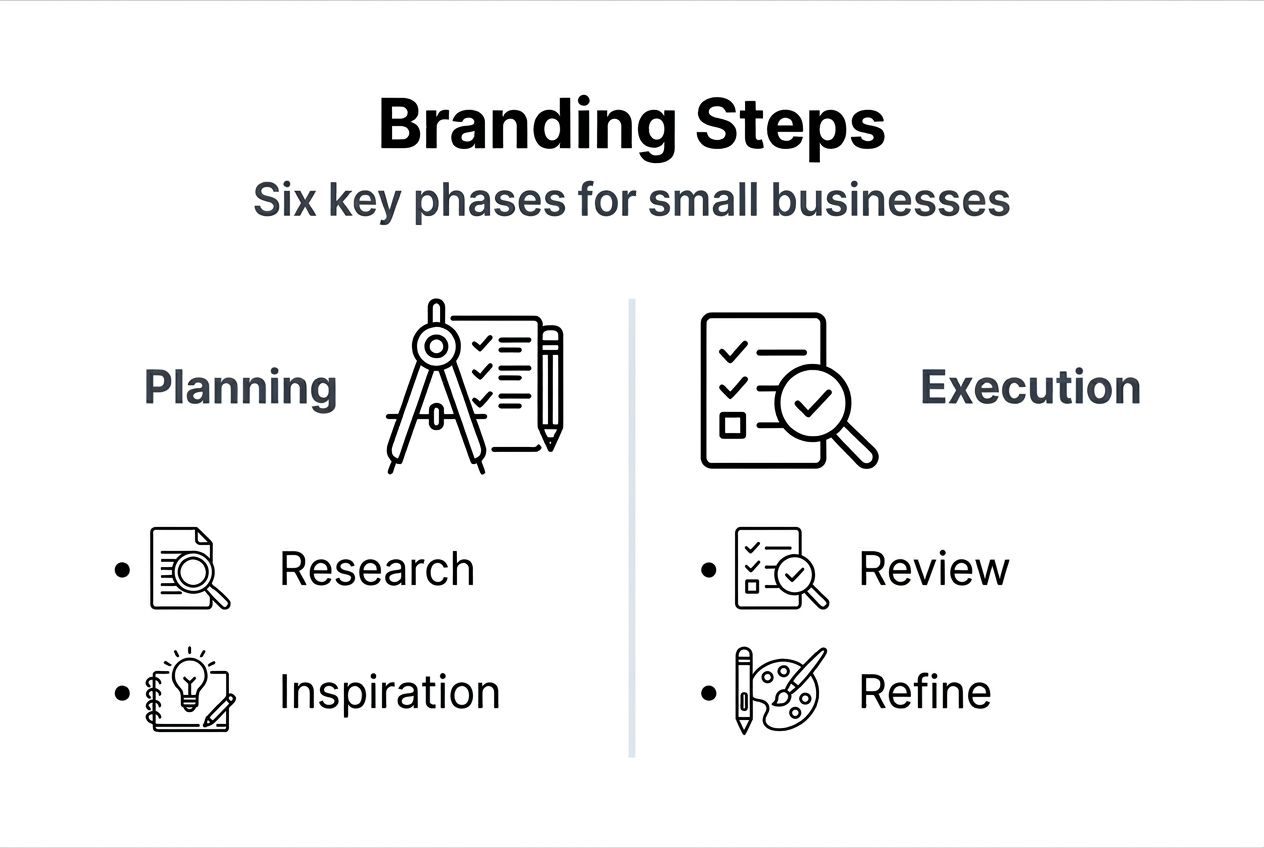
Consistent brand presentation increases revenue by 23%. This happens because repeated exposure to cohesive visuals builds familiarity and trust. Customers recognize your brand instantly whether they encounter it on Instagram, your website, email campaigns, or physical packaging.
Apply your visual identity systematically across:
Website design including headers, buttons, imagery, and layout
Social media profiles, posts, and advertising creative
Email templates for newsletters, promotions, and transactional messages
Print materials like business cards, brochures, and signage
Product packaging and labeling
Presentation decks and sales collateral
Internal documents that employees and partners see
Common pitfalls derail branding consistency. Avoid these mistakes:
Using outdated logo versions because files are scattered across drives
Letting different team members interpret brand guidelines differently
Ignoring brand standards for “quick” projects that become permanent
Failing to update visuals when audience preferences or market positioning shifts
Applying visuals without considering accessibility for users with vision impairments
Understanding the power of touchpoints building a brand helps you identify where consistency matters most. Every customer interaction either reinforces or weakens brand recognition.
Branding Approach | Revenue Impact | Customer Trust | Website Conversion Rate |
Inconsistent visuals | Baseline | Low to moderate | 1% to 2% average |
Consistent visuals | +23% increase | High | 3% to 6% with good UX |
Professional design and user experience improvements can boost website conversion rates significantly. Research from Baymard Institute shows thoughtful UX changes often double or triple conversions. Your visual branding directly impacts these metrics by creating trust and reducing friction.
Measure branding success through:
Brand recall surveys asking customers if they remember your brand after exposure
Website analytics tracking time on site, bounce rates, and conversion improvements
Social media engagement comparing performance before and after rebranding
Sales data correlating revenue changes with branding launch timing
Customer feedback directly asking about brand perception and trust
Adapt your branding strategy based on data. Branding strategy in 2026 evolves with market conditions, technology, and audience preferences. Annual reviews ensure your visual identity stays relevant and effective, supporting business growth as you scale.
Get professional help to elevate your visual branding
Mastering the visual branding process takes time, expertise, and resources many small business owners lack. Partnering with professionals accelerates results and ensures polished execution that drives ROI.
LOOM Brand Designs specializes in comprehensive branding solutions tailored for growing businesses. Our basic branding package delivers logo design, color palettes, typography, and style guides that establish strong visual foundations. For deeper strategic work, our brand development consultation aligns your visual identity with business goals through collaborative discovery and planning.
Extend your branding across digital channels with expert website design and development that integrates your visual identity seamlessly. From initial strategy through final implementation, we handle technical complexity so you focus on running your business. Explore our services to discover how professional branding transforms customer perception, builds trust, and drives measurable business growth.
Frequently asked questions
How long does the visual branding process typically take?
A comprehensive branding process takes 4 to 8 weeks for most small businesses, depending on scope and decision-making speed. This includes discovery, design exploration, revisions, and final delivery of all brand assets. Rushing the process often results in weak outcomes that require expensive revisions later.
What does professional visual branding cost?
Branding investment ranges from $2,000 for basic packages to $15,000+ for comprehensive identity systems including extensive research, strategy, and asset creation. Quality branding delivers ROI through improved customer trust, higher conversion rates, and increased revenue. View it as business infrastructure, not an expense.
Can I create my own visual branding?
You can create basic branding using online tools, but professional results require design expertise, strategic thinking, and objective perspective. DIY branding often looks amateur to customers, undermining credibility. For businesses serious about growth, professional branding is a worthwhile investment that pays dividends.
How often should I update my visual branding?
Refresh branding every 5 to 7 years to stay current, or when business positioning, target audience, or offerings change significantly. Minor updates maintain relevance without confusing existing customers. Completely abandoning established branding erases recognition equity unless absolutely necessary.
What is the biggest branding mistake small businesses make?
Inconsistent application across channels is the most common mistake, fragmenting recognition and diluting impact. Many businesses also skip audience research, creating visuals they personally like rather than what resonates with customers. Both errors waste money and limit growth potential.
Recommended