


What is brand identity? A small business guide for 2026
- Pawan Samarakoon
- Mar 19
- 9 min read

Most entrepreneurs believe brand identity is just a logo. That oversimplification costs businesses thousands in wasted marketing spend and confused messaging. Brand identity encompasses your complete visual, verbal, and emotional representation across every customer touchpoint. This guide breaks down exactly what brand identity means, why it drives measurable revenue growth, and how to build yours strategically. You’ll learn proven frameworks, avoid common pitfalls, and discover how consistent branding transforms small businesses into recognized, trusted brands that command premium pricing and loyal customers.
Table of Contents
Key takeaways
Point | Details |
Comprehensive system | Brand identity combines logos, colors, typography, messaging, tone, and customer perception into one cohesive system. |
Revenue impact | Consistent branding increases revenue by 20-23% and enables 13% price premiums over competitors. |
Structured process | Building effective brand identity follows research, strategy, design, guidelines, implementation, and maintenance phases over 6-12 weeks. |
Strategy first | Starting with clear positioning and strategy before design prevents costly mistakes and ensures long-term consistency. |
What is brand identity and why it matters
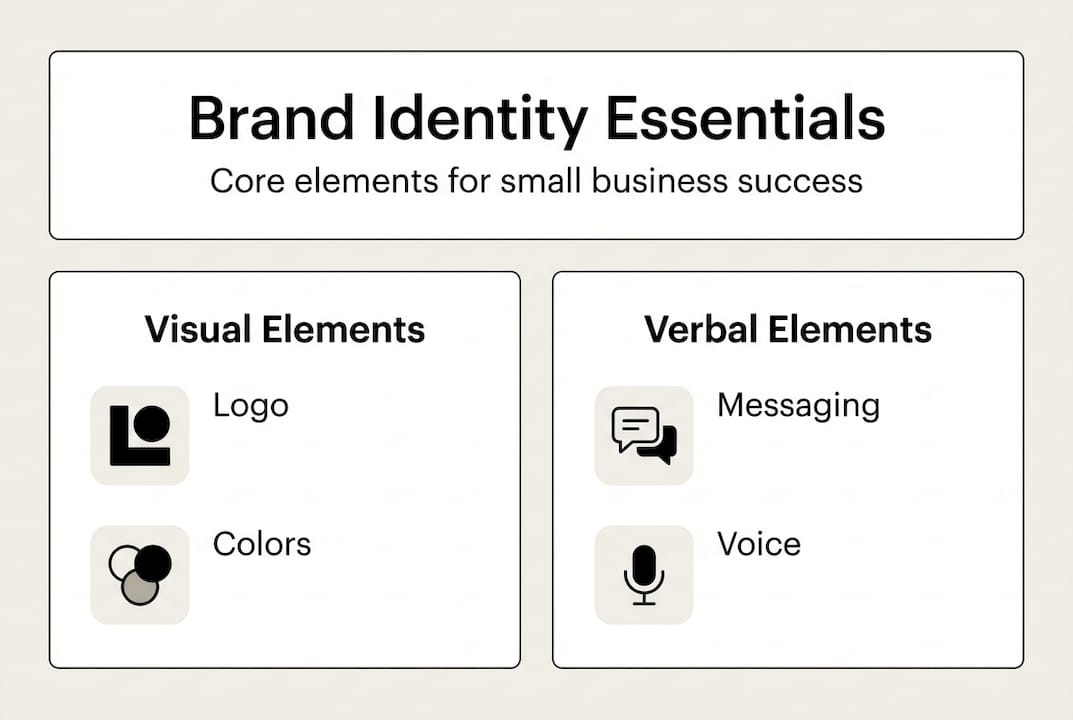
Brand identity is the complete visual, verbal, and emotional representation of your business. It includes your logo, color palette, typography, messaging frameworks, tone of voice, and the intentional perception you create in customers’ minds. This curated combination showcases your business personality and core values across every interaction, from your website to social media posts to packaging.
Brand identity differs fundamentally from brand image. You control and create your brand identity through deliberate choices. Brand image represents how consumers actually perceive you, shaped by their experiences and interactions with your business. Strong brand identity aims to align these two concepts, ensuring customers see what you intend to project.
Why does this matter for your small business? Intentional brand identity builds immediate recognition and trust. When customers encounter consistent visuals, messaging, and experiences across touchpoints, they perceive your business as professional, reliable, and worth premium pricing. This consistency directly impacts your bottom line through improved marketing effectiveness, clearer differentiation from competitors, and stronger customer loyalty.
The business case is compelling. Companies with consistent brand presentation see 20-23% revenue increases compared to inconsistent competitors. Your branding strategy becomes the foundation for every marketing decision, from ad creative to email campaigns.
Key components that make up effective brand identity include:
Visual elements like logos, color schemes, typography, imagery style, and design templates
Verbal elements including brand voice, messaging pillars, taglines, and communication guidelines
Emotional elements such as brand personality, values, and the feelings you want to evoke
Experiential elements covering customer service approach, product packaging, and interaction standards
Each component works together to create a unified impression. When aligned strategically, these elements transform from individual assets into a powerful system that drives recognition, trust, and business growth.

How to build your brand identity: methodologies and frameworks
Developing effective brand identity follows a structured process with clear phases. Most small businesses complete initial development in 6-12 weeks, though timelines vary based on complexity and resources. The process ensures every element serves your business goals rather than just looking attractive.
The six core phases for building brand identity:
Research and discovery: Analyze your target audience, competitors, market position, and business goals to establish strategic foundation.
Strategy development: Define brand positioning, personality, values, and messaging frameworks that differentiate you meaningfully.
Visual design: Create logos, select color palettes, choose typography, and develop design systems based on strategic decisions.
Verbal identity: Craft brand voice, tone guidelines, messaging hierarchies, and communication standards.
Guidelines creation: Document all brand elements in comprehensive guidelines ensuring consistent application.
Implementation and rollout: Apply new brand identity across all touchpoints, from website to business cards to social media.
Successful visual branding requires ongoing maintenance. Schedule quarterly reviews to assess consistency, update outdated elements, and refine based on market feedback.
Frameworks simplify this complex process. The Double Diamond approach alternates between divergent exploration and convergent decision making across four stages: discover, define, develop, deliver. This prevents rushing to visual solutions before understanding strategic requirements. Another effective model breaks brand building into four parallel tracks: visual identity, verbal identity, experiential touchpoints, and brand guidelines.
| Framework | Key Elements | Primary Benefit | Typical Timeline | | — | — | — | | Double Diamond | Discover, define, develop, deliver phases | Ensures thorough exploration before decisions | 8-12 weeks | | 4-Track Model | Visual, verbal, experiential, guidelines developed simultaneously | Comprehensive coverage of all brand aspects | 6-10 weeks | | Lean Brand Sprint | Rapid prototyping with customer feedback loops | Fast validation and iteration | 3-6 weeks |
Your branding strategy determines which framework fits best. Startups often benefit from lean approaches, while established businesses refreshing their brand need comprehensive frameworks.
Pro Tip: Always complete strategy and positioning work before touching design software. Starting with logo sketches without strategic foundation leads to pretty designs that fail to differentiate your business or resonate with target customers. This mistake costs thousands in redesigns.
Many entrepreneurs skip directly to visual design, excited to see logos and colors. Resist this urge. Strategy establishes what your brand stands for, who it serves, and how it differs from competitors. Design then translates these strategic decisions into visual and verbal form. Following this sequence through an initial consultation prevents misalignment and wasted resources.
The 7 steps for branding success emphasize this strategic foundation, proving that disciplined process outperforms creative inspiration alone.
Common challenges and nuanced considerations for small businesses
Small business owners face distinct obstacles when building brand identity. Budget constraints top the list, forcing many entrepreneurs toward free tools like Canva rather than professional designers. While these platforms enable DIY branding, they often produce generic results that blend into competitor noise. The real cost appears later through weak differentiation and missed revenue opportunities.
Inconsistency erodes trust and drives up costs. Using different logo versions across platforms, shifting color schemes seasonally, or changing messaging tone between channels confuses customers and weakens recognition. Most successful brands limit themselves to 1-2 primary logo colors and maintain rigid consistency guidelines.
Specific challenges small businesses encounter:
Limited budgets requiring strategic prioritization of brand elements versus trying to do everything at once
Temptation to chase visual trends rather than building timeless, distinctive identity
Difficulty maintaining consistency when multiple team members create content without clear guidelines
Pressure to redesign frequently instead of letting brand equity accumulate over time
Confusion about which brand elements actually drive business results versus cosmetic preferences
Small brands also face inherent limitations in customer loyalty compared to established competitors. Your brand identity must work harder to build trust quickly. This reality demands strategic focus over flashy design. Every element should serve a clear business purpose, whether building credibility, clarifying your offer, or differentiating from competitors.
Regular brand reviews keep your identity relevant without constant overhauls. Schedule assessments twice yearly to evaluate whether your brand still aligns with business goals, resonates with target customers, and stands out in your market. Minor refinements maintain freshness while preserving recognition equity.
Pro Tip: Never start brand development by designing a logo. Begin with clear answers to strategic questions about positioning, target audience, and competitive differentiation. Logo design becomes simple when strategy is solid, but impossible to get right without that foundation. This sequence delivers stronger ROI and prevents expensive redesigns.
Another nuanced consideration involves balancing consistency with flexibility. Your brand positioning needs enough structure to ensure recognition but sufficient adaptability to work across diverse applications. Overly rigid guidelines stifle creativity and slow execution. Loose guidelines create chaos and inconsistency.
The solution lies in defining core non-negotiables like logo usage, primary colors, and brand voice while allowing flexibility in secondary applications. This approach maintains identity integrity while enabling practical implementation across various contexts and platforms.
Understanding digital branding significance becomes critical as most customer interactions happen online. Your brand identity must translate effectively to digital touchpoints while maintaining consistency with any physical presence.
Different branding strategies suit different business models and growth stages. Selecting the right approach for your situation prevents wasted effort on tactics that don’t match your reality.
Measuring the impact: brand identity’s ROI and business growth
Strong brand identity delivers measurable financial returns. Consistent branding increases revenue by 20-23% compared to businesses with inconsistent or weak brand presentation. This impact stems from improved recognition, enhanced trust, and clearer differentiation that makes marketing more effective across all channels.
The financial benefits extend beyond revenue growth. Well-branded businesses command 13% price premiums over competitors offering similar products or services. Customers willingly pay more for brands they recognize and trust, even when functional differences are minimal. This pricing power directly improves profit margins without requiring operational changes.
Rebranding initiatives show dramatic results when executed strategically. Companies report up to 30% sales increases following comprehensive brand refreshes that clarify positioning and modernize visual identity. These gains reflect improved market perception and enhanced marketing effectiveness.
Metric | Impact | Source |
Revenue increase | 20-23% from consistent branding | Multiple branding studies |
Price premium | 13% over unbranded competitors | Brand valuation research |
Sales lift | Up to 30% after strategic rebrand | Rebranding case studies |
Marketing efficiency | 3-4x better ad performance | Digital marketing benchmarks |
McKinsey research reveals an even broader advantage:
Strong brands outperform their competitors by 20% across multiple business metrics including customer acquisition costs, lifetime value, and market share growth. This performance gap widens over time as brand equity compounds.
For small business owners, these benefits translate to practical advantages. Your marketing becomes more efficient when customers already recognize and trust your brand. Advertising costs decrease as brand familiarity improves conversion rates. Customer acquisition gets easier as word-of-mouth referrals increase from satisfied customers who identify with your brand.
Tracking brand performance requires monitoring specific metrics beyond vanity numbers. Focus on brand awareness through aided and unaided recall surveys, brand perception through customer sentiment analysis, and brand consistency through audits of customer touchpoints. These measurements reveal whether your brand identity actually drives business results.
Align your branding with marketing KPIs by connecting brand initiatives to revenue outcomes. Track how brand consistency affects conversion rates, how brand recognition influences customer acquisition costs, and how brand perception impacts customer lifetime value. This data-driven approach proves ROI and guides ongoing brand investments.
Your branding strategy results should demonstrate clear connections between brand investments and business growth. Without measurement, you cannot optimize or justify continued brand development.
Understanding performance marketing benefits helps integrate brand building with direct response tactics for maximum impact.
Explore professional branding solutions to grow your business
Building effective brand identity requires strategic thinking, design expertise, and consistent execution across all touchpoints. Many entrepreneurs find professional support accelerates results while avoiding costly mistakes. LOOM Brand Designs specializes in helping small businesses develop cohesive brand identities that drive measurable growth.
Our basic branding package provides essential brand elements for businesses starting their identity journey, while the standard branding package delivers comprehensive brand systems including strategy, visual identity, verbal guidelines, and implementation support. Both options save you time, ensure professional quality, and maximize your branding ROI through proven frameworks.
Professional graphic design services extend your brand identity across marketing materials, ensuring consistency that builds recognition and trust. Outsourcing brand development lets you focus on running your business while experts handle the strategic and creative work that establishes your market position.
Frequently asked questions
What is the difference between brand identity and brand image?
Brand identity represents how you intentionally present your business through controlled elements like logos, colors, messaging, and tone. Brand image reflects how customers actually perceive your business based on their experiences and interactions. You create your identity, but customers form your image. Strong brand identity aims to align these two by ensuring consistent, strategic presentation that shapes desired perceptions.
How long does it usually take to develop a strong brand identity?
Most small businesses complete initial brand identity development in 6-12 weeks, depending on scope and complexity. This timeline includes research, strategy, design, guidelines creation, and initial implementation. Ongoing maintenance and periodic updates continue after launch, with quarterly reviews recommended to ensure consistency and relevance. Rushing the process often produces weak results, while excessive perfectionism delays valuable market feedback.
Can I build my brand identity myself or should I hire a professional?
DIY brand building using tools like Canva works for very tight budgets but risks inconsistency, generic design, and weak strategy. Professional services deliver higher ROI through strategic positioning, cohesive design systems, and comprehensive guidelines that prevent costly mistakes. The choice depends on your budget, timeline, business goals, and comfort with strategic brand thinking. Many businesses start DIY then upgrade to professional services as they grow and recognize branding’s revenue impact. Our basic branding package offers an affordable professional option.
What are the most important elements to focus on in a brand identity?
Core elements include your logo system, color palette, typography, messaging framework, and brand voice. Logo provides instant recognition, colors trigger emotional associations, typography conveys personality, messaging communicates value, and voice builds relationship. Consistency across all five elements matters more than perfection in any single component. Start with strategy and positioning before designing these elements to ensure they support business goals rather than just looking attractive.
Recommended
Comments