


What is brand voice: a guide for business owners
- Pawan Samarakoon
- Mar 22
- 9 min read

Many business owners think brand voice is just about catchy slogans or a tagline that sounds smart. That’s like saying your personality is just the clothes you wear. Your brand voice is the consistent personality and style that comes through in every piece of communication you create, from social media posts to customer service emails. It shapes how customers perceive your business and determines whether they feel connected to what you offer. This guide breaks down what brand voice really means, why it matters for your business, and how to develop one that resonates with your audience while staying true to your brand identity.
Table of Contents
Key Takeaways
Point | Details |
Brand voice consistency | Your brand voice is the consistent personality and style that appears in every communication, not just slogans. |
Trust and loyalty | A consistent voice across all touchpoints makes customers recognize you and feel emotionally connected, building trust and loyalty. |
Voice versus messaging | Voice is how you say things while messaging is what you say, and they must align across channels. |
Document early | Start with a simple one page guide that captures adjectives, favored words, and words to avoid to prevent confusion. |
Align with identity and marketing | The voice acts as the verbal expression of your brand identity and strengthens your marketing strategy across channels. |
Understanding brand voice: definition and core components
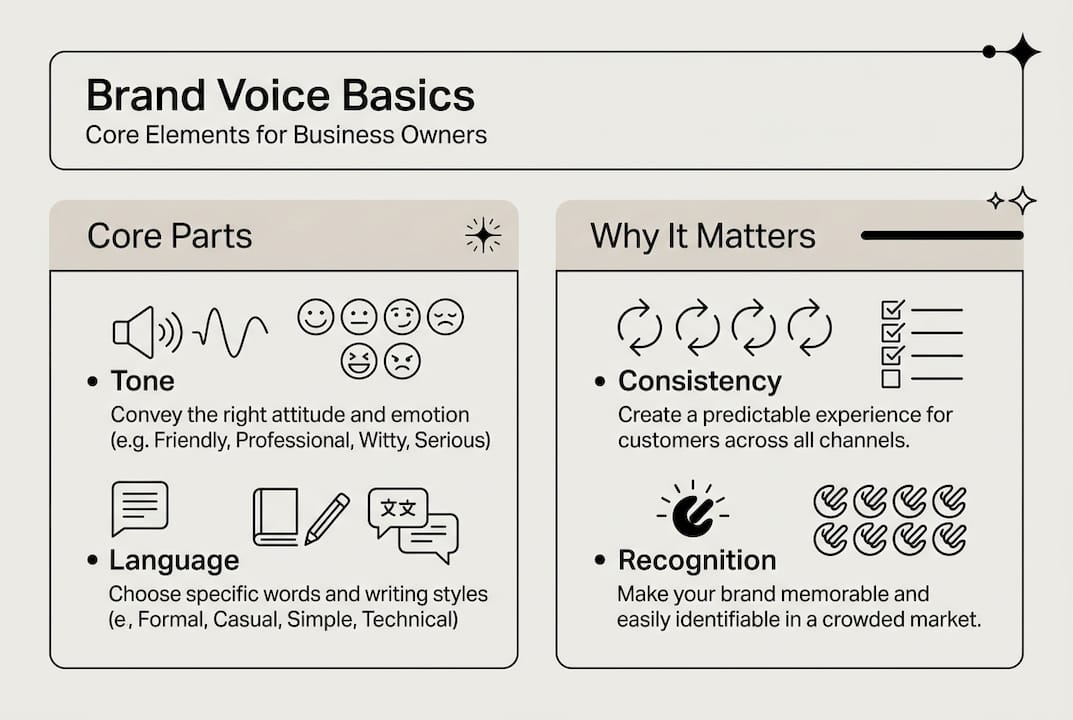
Brand voice is the unique personality and style reflected in all your brand communications. It’s not what you say but how you say it. Think of it as the verbal DNA that makes your business instantly recognizable, whether someone reads your website, opens your email, or scrolls past your social media post.

The core components of brand voice include tone, language choice, values expression, and emotional impact. Tone refers to the attitude you convey, ranging from professional and authoritative to casual and friendly. Language choice involves the specific words and phrases you use consistently. Your values expression shows what matters to your business through communication patterns. Emotional impact determines how people feel after interacting with your content.
Brand voice differs from brand messaging but works closely with it. Messaging covers what you communicate, your key points and value propositions. Voice covers how you deliver those messages. You might tell customers about a new service, but your voice determines whether you sound excited, reassuring, or matter-of-fact about it.
Brand voice shapes how customers perceive and emotionally connect with a business. When you maintain consistent voice across every touchpoint, customers develop familiarity with your brand. This familiarity breeds trust, and trust converts into loyalty. A customer who recognizes your voice immediately feels like they’re interacting with a friend rather than a faceless corporation.
Consistent brand voice also streamlines your content creation process. When everyone on your team understands the voice guidelines, they can create content that sounds authentically you without constant oversight. This consistency extends your brand identity guide into every customer interaction.
Pro Tip: Start documenting your brand voice from day one, even if it’s just a simple one-page document. Capture the adjectives that describe how you want to sound, words you always use, and phrases you avoid. This early documentation prevents the confusion that comes when multiple people start creating content without clear direction.
How brand voice fits into your overall brand identity and marketing strategy
Brand identity encompasses all the visual, verbal, and experiential elements that define how customers recognize and remember your business. It includes your logo, color palette, typography, imagery style, messaging framework, customer service approach, and yes, your brand voice. These elements work together to create a cohesive impression in the marketplace.
Brand voice serves as the verbal expression of your brand identity. While your logo and colors create visual recognition, your voice creates verbal recognition. When someone reads your content without seeing your logo, they should still recognize it’s you based on how it sounds. This verbal consistency is essential for marketing communications across every channel.
Brand voice contributes significantly to overall brand identity and marketing strategy by creating consistent emotional connections. Consider how Apple’s minimalist voice matches their clean design aesthetic, or how Mailchimp’s friendly, quirky voice aligns with their approachable brand personality. The verbal and visual elements reinforce each other.
Your brand voice directly impacts customer perception in measurable ways. A professional services firm using casual slang might confuse potential clients about their expertise level. A youth-focused brand using corporate jargon will fail to connect with their target audience. The voice you choose sends immediate signals about who you are and who you serve.
“Your brand voice isn’t just words on a page. It’s the emotional bridge between your business values and your customer’s needs. When that bridge feels authentic and consistent, customers cross it willingly.”
Brand voice integrates with your marketing channels and strategies in several key ways:
Social media posts use your voice to create personality and encourage engagement with followers
Email campaigns leverage voice to build relationships and guide customers through your sales funnel
Website content establishes credibility and helps visitors understand your value proposition quickly
Customer service interactions use voice to resolve issues while reinforcing brand values
Advertising copy applies voice to cut through noise and create memorable brand moments
Sales presentations incorporate voice to build trust and close deals authentically
Your brand identity small business guide should include detailed voice guidelines alongside visual standards. This ensures every team member, contractor, or agency partner can represent your brand accurately. As your business scales, this documentation becomes the foundation for maintaining consistency across growing teams and expanding marketing efforts. Strong voice alignment with your branding strategy 2026 initiatives ensures every campaign reinforces rather than dilutes your brand identity.
Establishing and maintaining a consistent brand voice across channels
Developing and maintaining a consistent brand voice requires intentional strategy and ongoing effort. Follow these steps to establish your voice:
Define your brand personality by identifying three to five core adjectives that describe how you want to sound, such as confident, approachable, innovative, or trustworthy
Create comprehensive brand voice guidelines that include tone descriptions, vocabulary preferences, sentence structure patterns, and specific examples of good and bad usage
Train your entire team on voice guidelines through workshops, reference documents, and regular feedback sessions to ensure everyone understands and applies them correctly
Audit existing communications across all channels to identify inconsistencies and opportunities for improvement, then systematically update content to align with your defined voice
Establish approval processes for new content to catch voice mismatches before they reach your audience
Monitor brand voice usage over time through regular content reviews and customer feedback analysis
Consistency in brand voice across platforms builds trust and brand loyalty. When customers encounter the same personality on your website, social media, and email, they develop confidence in your brand. Inconsistency creates confusion and makes your business seem disorganized or inauthentic.
Pro Tip: Create a simple voice checklist that content creators can reference before publishing anything. Include questions like “Does this sound like us?” and “Would our ideal customer connect with this tone?” This quick gut check catches most voice inconsistencies before they go live.
Here’s how consistent versus inconsistent brand voice appears across different channels:
Channel | Consistent voice example | Inconsistent voice example |
Social media | “We’re pumped to share our new feature. It’s going to save you hours every week.” | “We’re pumped to share our new feature. This solution leverages advanced methodologies to optimize operational efficiency.” |
“Hey there! Quick question: are you struggling with project deadlines?” | “Dear Valued Customer, We hope this correspondence finds you well. We wish to inquire about your project management challenges.” | |
Website | “Our team gets it. Running a business is tough, and marketing shouldn’t add to your stress.” | “Our organization comprehends the multifaceted challenges inherent in contemporary business operations.” |
Customer service | “No worries! Let me help you sort that out right now.” | “We acknowledge receipt of your inquiry and will process your request in accordance with established protocols.” |
Inconsistent voice causes immediate confusion for customers. They wonder if they’re dealing with the same company or if something changed. This confusion weakens brand trust because customers can’t predict what to expect from you. In worst cases, they might think your accounts were hacked or your business sold.
Tools and methods to monitor brand voice include content audits every quarter, customer surveys asking about brand perception, social media listening to see how people describe your brand, and style guide updates based on what’s working. Your digital marketing workflow 2026 should incorporate voice consistency checks at multiple stages. Consider using your digital marketing checklist 2026 to ensure voice alignment across all campaigns.
Common mistakes to avoid and tips for evolving your brand voice
Businesses frequently stumble with brand voice in predictable ways. Avoid these common mistakes:
Using inconsistent tone across different team members or departments, creating a fragmented brand experience
Copying competitor voices instead of developing your own authentic personality that reflects your unique values
Neglecting audience feedback about how your communications land, missing opportunities to refine and improve
Ignoring internal alignment, resulting in sales teams sounding completely different from marketing teams
Making sudden drastic changes without explanation, confusing loyal customers who connected with your original voice
Trying to appeal to everyone by using generic, safe language that fails to resonate with anyone specifically
Sudden drastic voice changes confuse customers and weaken brand perception. Imagine if your favorite coffee shop suddenly started talking like a law firm. You’d wonder what happened and whether the place you loved still exists. Customers develop emotional attachments to brand voices, and abrupt changes feel like betrayal.
Brand voice must evolve thoughtfully to stay relevant without losing core identity. Markets shift, audiences mature, and businesses grow. Your voice from five years ago might not serve your current position. The key is evolution, not revolution.
Pro Tip: When updating your brand voice, involve key stakeholders from across your organization and conduct audience research to understand what resonates. Test new voice elements in small campaigns before rolling them out everywhere. This gradual approach lets you gauge reaction and adjust before committing fully.
Tips for gradual and strategic brand voice evolution include starting with minor adjustments to vocabulary or tone intensity rather than complete personality overhauls. Document why changes are necessary and what you hope to achieve. Communicate updates to your team clearly so everyone evolves together. Monitor customer response carefully and be willing to course correct if something isn’t landing well.
Regular reviews keep your brand voice aligned with business growth and market shifts. Schedule annual voice audits where you assess whether your current voice still serves your goals. Ask questions like: Does this voice reflect who we are now? Does it resonate with our current target audience? Does it differentiate us effectively from competitors? Are we using it consistently?
Your brand positioning guide 2026 should inform voice evolution decisions. As your positioning shifts to capture new market opportunities, your voice may need subtle adjustments to match. The goal is maintaining recognizability while staying relevant and authentic to your current business reality.
Discover professional branding support for your business
Defining and maintaining a consistent brand voice takes expertise and ongoing attention. LOOM Brand Designs specializes in helping businesses establish compelling brand voices that connect authentically with target audiences. Our comprehensive branding packages include voice development alongside visual identity creation, ensuring your verbal and visual elements work together seamlessly.

Our basic branding package provides essential voice guidelines and brand personality definition for businesses just starting their branding journey. For more established businesses seeking comprehensive voice documentation and training, our standard branding package delivers detailed guidelines and team workshops. We also offer graphic design services that complement your verbal brand identity with stunning visual communications. Contact LOOM Brand Designs today for a consultation and start building a brand voice that truly represents your business and resonates with your customers.
Frequently asked questions
What is the difference between brand voice and brand personality?
Brand personality is the set of human traits attributed to a brand, such as friendly, innovative, or reliable. Brand voice is how that personality is expressed in communication through specific word choices, tone, and style. Think of personality as who you are and voice as how you speak. A brand can have a friendly personality but express it through different voice styles, from casual and playful to warm and professional.
How can I ensure my brand voice stays consistent across different marketing channels?
Create detailed brand voice guidelines that include tone descriptions, vocabulary preferences, and concrete examples. Share these guidelines with everyone who creates content for your brand. Regularly audit communications across all channels to identify inconsistencies. Use collaboration tools that allow team members to reference voice standards easily. Train everyone involved in content creation on brand voice standards through workshops and ongoing feedback. Establish approval workflows that catch voice mismatches before content goes live.
When should a business consider evolving its brand voice?
Consider evolving your brand voice after major business changes like mergers, significant pivots, or expansion into new markets. Audience shifts, such as targeting a different demographic or moving upmarket, may require voice adjustments. Pay attention to customer feedback and brand performance data that suggests your current voice isn’t resonating. However, evolve voice gradually rather than changing everything overnight. Maintain core recognizable elements while refining aspects that no longer serve your goals. Test changes in limited campaigns before rolling them out across all channels.
Recommended
Comments