


What is digital marketing? Essential guide for small businesses 2026
- jayanipiumika
- 1 day ago
- 9 min read

Many small business owners believe digital marketing is too complicated or expensive to tackle. The reality is that understanding a few core principles can transform how you connect with customers and grow revenue. 76% of consumers look for a company online before visiting a store. This guide breaks down what digital marketing is and provides simple steps to use it for growth in 2026.
Table of Contents
Key takeaways
Point | Details |
Digital marketing connects your business with a broader audience online | It enables you to reach customers where they spend most of their time. |
A professional website and SEO are foundation elements for credibility and visibility | These components establish trust and help customers find you through search engines. |
Social media grows loyal communities and boosts brand awareness | Engaging content on platforms like Facebook and Instagram builds relationships. |
Paid ads help target specific customers and reinforce messaging | Strategic advertising campaigns reach the right people at the right time. |
Tracking results ensures marketing efforts deliver ROI | Monitoring metrics allows you to optimize campaigns and allocate budgets effectively. |
Why digital marketing matters for small businesses
Consumers today research businesses online before making purchasing decisions or visiting physical locations. This shift in behavior means your online presence directly impacts your ability to attract and retain customers. Digital marketing puts your business in front of a wider audience than most traditional methods like print ads or direct mail ever could.
Traditional marketing channels often require significant upfront investment with limited ability to track results. Digital marketing offers precise targeting, measurable outcomes, and the flexibility to adjust campaigns in real time. Small businesses gain a competitive edge by meeting customers where they already spend hours each day browsing, searching, and engaging with content.
A professional website combined with active social media profiles builds credibility and trust. When potential customers find consistent information about your business across multiple online platforms, they feel more confident choosing your services. This digital foundation allows you to compete effectively with larger companies that have bigger marketing budgets.
76% of consumers look at online presence before physically visiting a business.
The advantages of digital marketing for small businesses include:
Wider reach beyond local geographic limitations
Cost efficiency compared to traditional advertising
Measurable ROI through analytics and tracking tools
Ability to target specific demographics and interests
Real time adjustments based on performance data
Direct engagement with customers through comments and messages
Businesses that embrace digital marketing can grow faster and more sustainably. The digital marketing checklist 2026 provides practical steps to implement these strategies systematically. Understanding why digital marketing matters sets the foundation for building an effective online presence that drives tangible business results.
Core components of digital marketing
Your website serves as your digital storefront and often creates the first impression potential customers have of your business. A well-optimized website is crucial for converting visitors into paying customers and building lasting credibility. Fast loading times, HTTPS security, customer testimonials, and responsive design that works on mobile devices are essential features. Every element should guide visitors toward taking action, whether that means making a purchase, booking a consultation, or contacting your team.

Search engine optimization helps customers find your business when they search for products or services you offer. SEO involves using relevant keywords, creating localized pages, and claiming a spot on Google My Business. These tactics increase organic traffic without paying for each click. Optimizing your website content around terms your target audience actually searches for positions you higher in search results and drives qualified leads to your site.
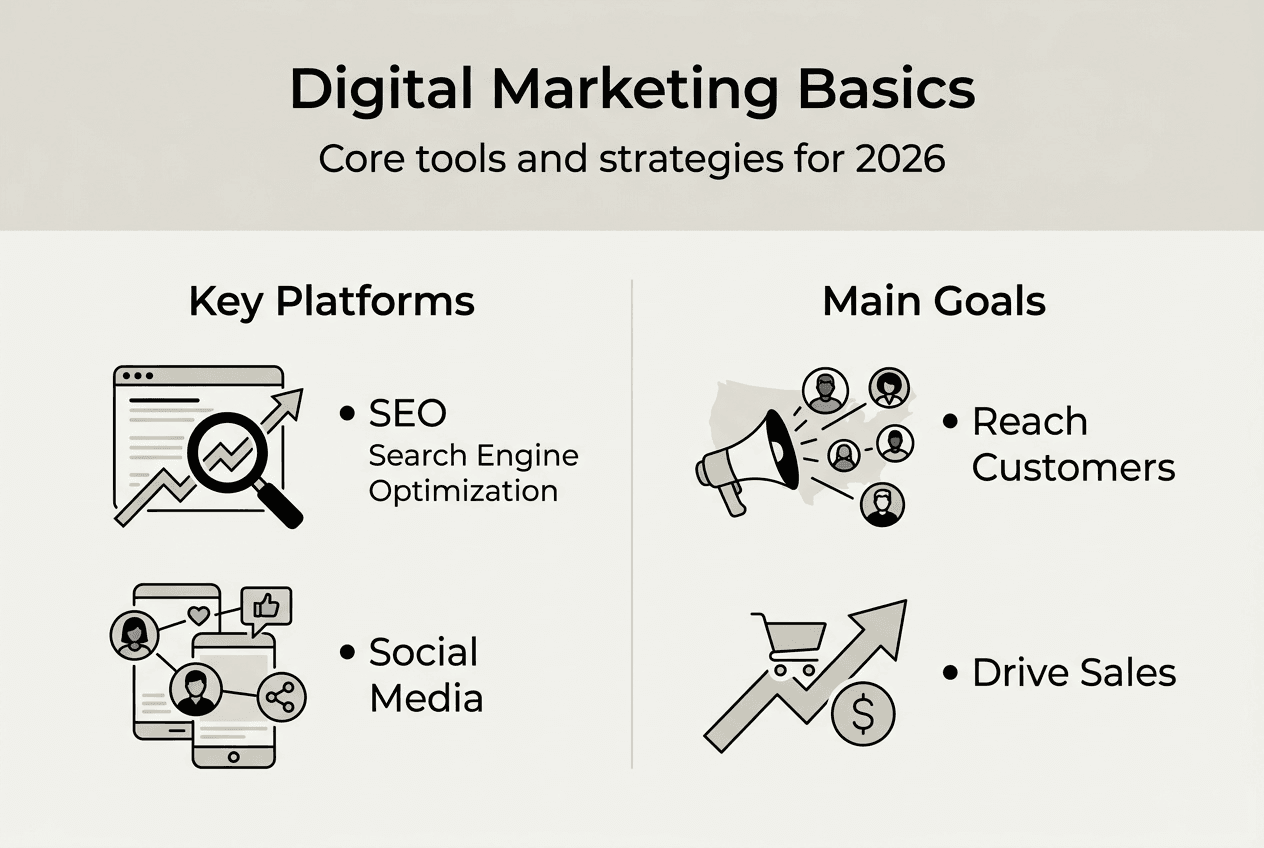
Social media marketing builds relationships and keeps your brand top of mind. Platforms like Facebook, Instagram, and LinkedIn allow you to share engaging posts, respond to customer questions, and collaborate with influencers who reach your target audience. Consistent posting schedules combined with authentic engagement create loyal communities around your brand. Social media also provides valuable insights into customer preferences and feedback.
Paid digital advertising accelerates your reach by targeting specific audiences based on demographics, interests, and behaviors. Retargeting campaigns remind visitors who left your website to return and complete purchases. Campaign tracking shows exactly which ads generate conversions, allowing you to refine your approach continuously. Paid ads complement organic strategies by delivering immediate visibility while you build long term SEO momentum.
Here are the steps to establish core digital marketing elements:
Create or optimize your website with clear messaging and strong calls to action
Claim and complete your Google Business Profile with accurate information and photos
Research keywords your customers use and incorporate them naturally into website content
Set up social media profiles on platforms where your target audience spends time
Post valuable content consistently that educates, entertains, or solves customer problems
Start small paid campaigns to test which channels deliver the best results
Key features of each component include:
Website: Fast loading, mobile responsive, secure HTTPS, clear navigation, compelling copy
SEO: Keyword optimization, local listings, quality backlinks, technical site health
Social media: Regular posting, community engagement, visual content, influencer partnerships
Paid ads: Precise targeting, budget control, retargeting capabilities, performance tracking
Pro Tip: Begin with free methods like Google Business Profile optimization and basic search engine optimization before investing heavily in paid ads. This approach builds a strong foundation while you learn what resonates with your audience. Once you understand your customer behavior patterns, paid campaigns become more effective because you can target with precision. The social media setup for small business package simplifies the initial setup process.
Optimizing and measuring digital marketing efforts
Continuous tracking and optimization separate successful campaigns from wasted budgets. Every marketing channel generates data that reveals what works and what needs adjustment. Track key metrics including views, click through rates, and conversions for every campaign to make data driven decisions. Without monitoring these indicators, you essentially operate blind, unable to determine which efforts drive revenue and which drain resources.
The most important marketing metrics to monitor include views or impressions that show how many people see your content, click through rate that measures how compelling your messaging is, conversion rate that indicates how many visitors take desired actions, and cost per acquisition that reveals how much you spend to gain each customer. These numbers tell the complete story of campaign performance from initial awareness through final purchase.
Common optimization actions that improve results:
A/B testing different headlines, images, and calls to action to identify top performers
Adjusting budgets to allocate more spend toward high converting campaigns
Refining audience targeting based on demographic and behavioral data
Updating ad creative regularly to prevent audience fatigue
Pausing underperforming campaigns and reallocating budget to winners
Improving landing page design to reduce bounce rates and increase conversions
Businesses that monitor their campaigns closely are more likely to see positive returns. The table below illustrates how optimization transforms campaign performance:
Metric | Before Optimization | After Optimization | Improvement |
Click Through Rate | 1.2% | 3.8% | +217% |
Conversion Rate | 2.1% | 5.4% | +157% |
Cost Per Acquisition | $47 | $22 | -53% |
Return on Ad Spend | 2.1x | 5.7x | +171% |
Pro Tip: Test small daily budgets of $5 to $10 on various platforms initially to find the best ROI before scaling up. This experimental approach minimizes risk while providing valuable data about where your audience responds most enthusiastically. Once you identify winning channels, gradually increase investment while maintaining close monitoring. The google ads campaign optimization service handles this process systematically.
Adapting your strategy based on measurable results ensures you efficiently allocate marketing spend. Review performance weekly during the testing phase, then shift to monthly reviews once campaigns stabilize. Look for patterns in timing, messaging, and audience segments that consistently outperform. Use these insights to inform future creative decisions and budget allocations. Digital marketing success comes from treating every campaign as a learning opportunity that refines your understanding of what motivates your customers to take action.
Choosing the right digital marketing channels for your business
Different channels serve unique marketing purposes and reach audiences in distinct ways. SEO builds long term organic visibility, social media fosters community and brand loyalty, paid ads deliver immediate targeted reach, and email marketing nurtures existing relationships. Understanding these differences helps you select the mix that aligns with your specific business goals and customer behavior patterns.
The comparison table below contrasts channels by key factors:
Channel | Cost | Reach | Targeting Precision | Typical Use Case | Effort Required |
SEO | Low ongoing | High long term | Medium | Building organic traffic | High initial |
Social Media | Low to medium | Medium to high | Medium | Community building | Medium ongoing |
Paid Ads | Variable | High immediate | Very high | Quick conversions | Medium ongoing |
Email Marketing | Low | Medium | High | Customer retention | Low ongoing |
Factors to consider when selecting channels:
Target audience demographics and where they spend time online
Available budget for both setup and ongoing management
Business type and whether visual content plays a major role
Primary goals such as awareness, leads, or direct sales
Internal resources and expertise to manage campaigns
Timeline for seeing results and business urgency
Paid digital ads help quickly reach specific audiences with retargeting to complete purchases. This makes them ideal for businesses needing immediate visibility or promoting time sensitive offers. However, relying solely on paid advertising creates dependency on continuous spending. The most effective strategies combine channels that work together synergistically.
Testing small budgets across multiple platforms reveals which channels resonate most with your specific audience. What works for one business may not work for another, even within the same industry. Your customers’ preferences, your brand personality, and your product characteristics all influence channel effectiveness. Start with two or three channels that seem most aligned with your goals, then expand based on performance data.
Combining channels creates multiple touchpoints that reinforce your message. A customer might first discover your business through a social media post, research your website after seeing a paid ad, then convert after receiving an email with a special offer. This integrated approach recognizes that modern consumers interact with brands across various platforms before making purchasing decisions. The social media and SEO solutions package combines complementary channels for maximum impact.
Ready to elevate your digital marketing strategy?
Understanding digital marketing fundamentals is the first step toward building a thriving online presence. Implementing these strategies consistently transforms how customers discover and interact with your business. At LOOM Brand Designs, we specialize in creating comprehensive digital solutions tailored to your unique goals and audience.
Our team handles everything from search engine optimization that drives organic traffic to strategic google ads campaign optimization that maximizes your advertising budget. We also offer complete social media setup for small business packages that establish your presence across key platforms. Whether you need help with one component or want a fully integrated digital marketing strategy, we deliver measurable results that grow your business. Let’s discuss how we can elevate your brand and connect you with more customers online.
Frequently asked questions
What are the main types of digital marketing for small businesses?
The main types include search engine optimization, social media marketing, paid advertising, email marketing, and content marketing. Each focuses on different ways to connect and engage customers across various online platforms. SEO builds long term visibility, social media fosters community, paid ads deliver immediate reach, email nurtures relationships, and content establishes authority.
How much should I budget for digital marketing as a small business?
Start small with daily budgets between $4 and $8 to test and find best channels. This experimental approach minimizes risk while providing valuable performance data. Once you identify which platforms deliver the highest returns, allocate more budget to those campaigns. Most successful small businesses invest 7% to 12% of revenue in marketing, with a significant portion dedicated to digital channels.
Can I do digital marketing myself or should I hire professionals?
Most people start with free strategies before investing in paid ads or expert services. Begin with tools like Google Business Profile and basic SEO yourself to understand the fundamentals. As your business grows and campaigns become more complex, consider professional services for advanced strategies, branding needs, or time intensive tasks. Many businesses use a hybrid approach, handling some aspects internally while outsourcing specialized work.
How long does it take to see results from digital marketing?
SEO and organic efforts typically take three to six months to build momentum and show significant traffic increases. Paid ads can show quicker results, often within weeks, but require ongoing optimization to maintain performance. Social media growth happens gradually as you build community and engagement. Consistent effort leads to cumulative growth, with results compounding over time as your online presence strengthens and reputation builds.
Recommended
Comments